Overhead to Underground Conversion Inner West
Get rid of the wire across your yard or laneway with a new underground supply from the street to your meter board.
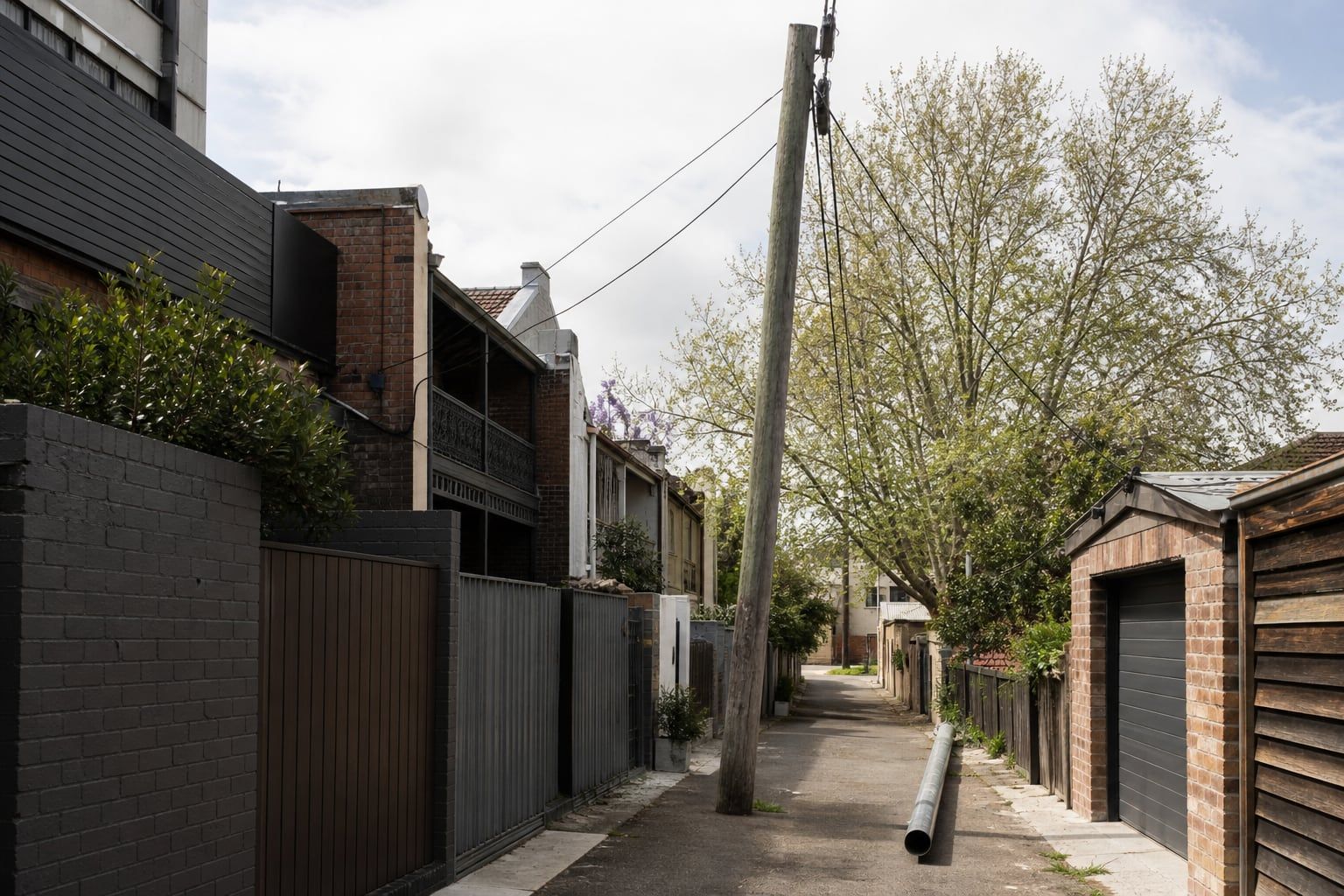
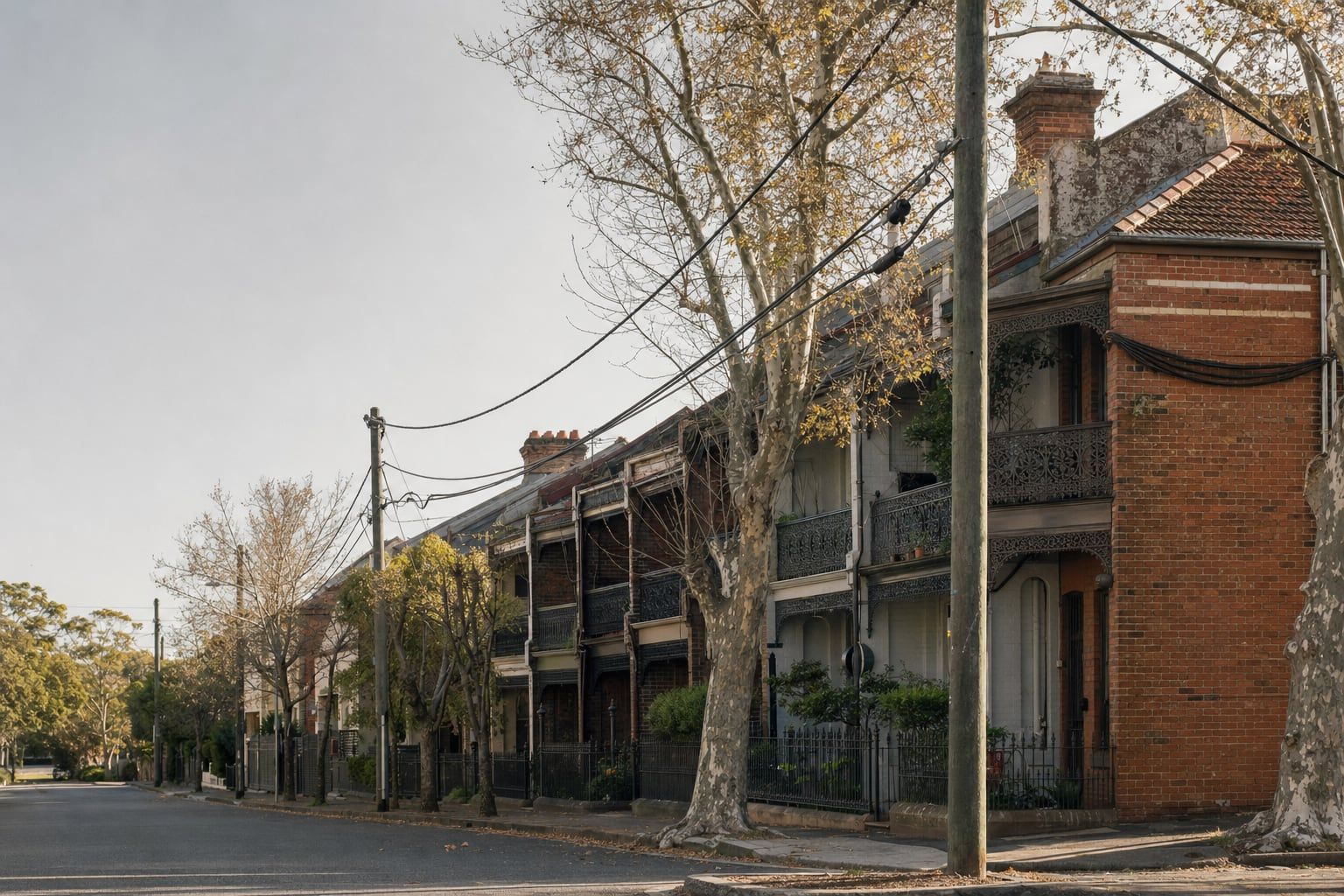
Most Inner West homes still get their power from an overhead service line strung from a street pole to a bracket on the house. It works, but it’s also the part of your supply most likely to be damaged. Branches, removalist trucks in narrow laneways, scaffolding for renovations and even big storms all take a toll. An overhead to underground conversion replaces that wire with a cable in conduit under the ground, running from the street to your meter board.
When undergrounding makes sense
Going underground is worth considering when:
- You’re adding a second storey, a pool or a rear extension and the overhead line is in the way
- The service line crosses a neighbour’s roof, a laneway with truck traffic or a tree that keeps growing into it
- The line is low, sagging or has been hit before
- You’re doing landscaping or a new driveway and the trench can go in at the same time
- You’d simply like the front of a restored terrace without a wire across it
It also suits homes with an old private power pole in the back yard, since the pole and its overhead run can come out together.
How the connection works in the Inner West
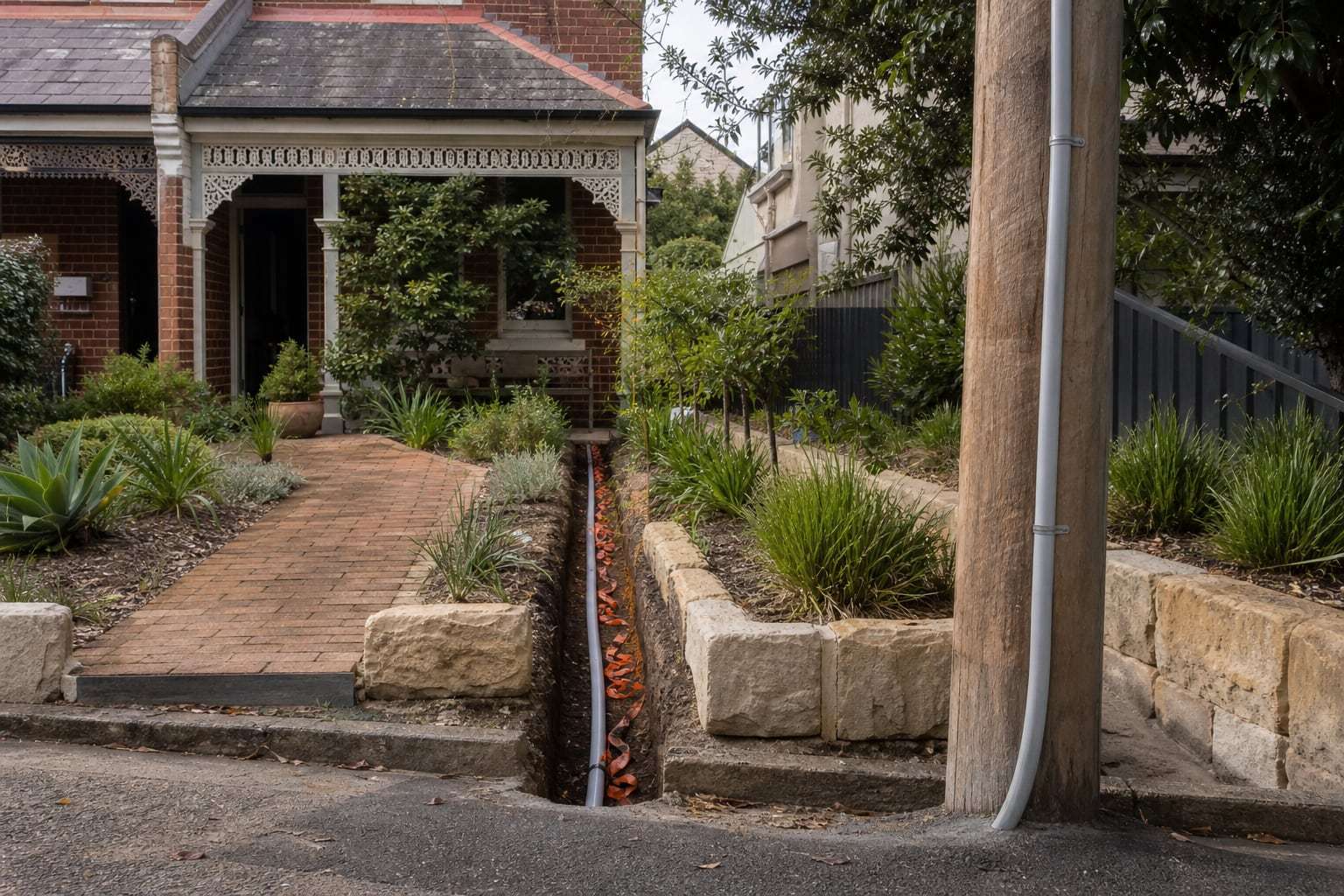
Most Inner West streets are still fed by overhead Ausgrid mains on poles. In those streets the usual method is to run the new underground cable to the base of the nearest suitable pole, then up the pole inside a protective conduit to connect to the mains at the top. In newer pockets, apartment precincts and some redeveloped streets around Rhodes, Rozelle and St Peters, the mains are already underground, so we connect to the pit at the property boundary.
Either way, we confirm the method and any Ausgrid requirements before we quote, so there are no surprises halfway through.
The trench and the cable
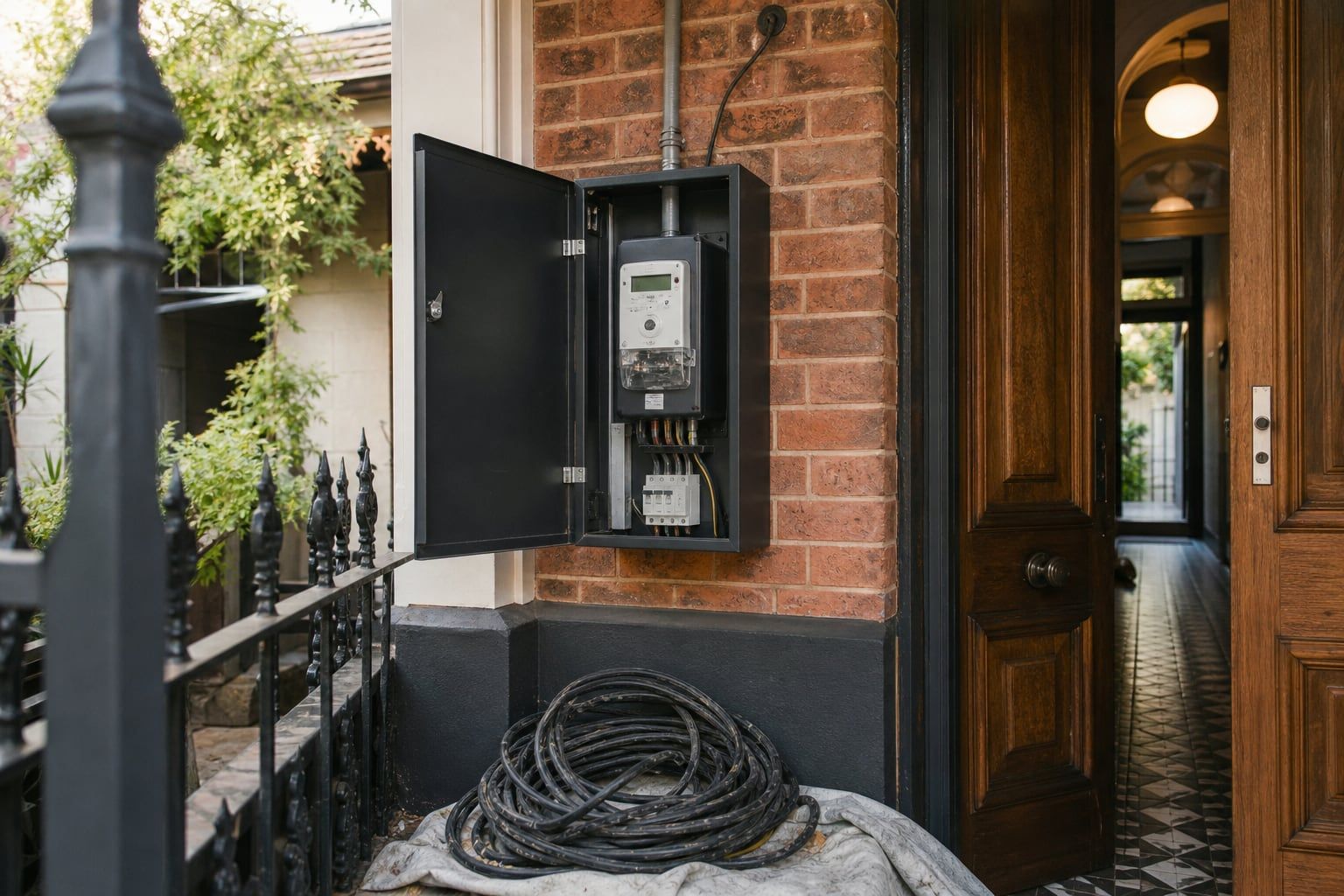
The trench runs from the connection point to your meter board along the shortest practical route. We lay heavy-duty electrical conduit at the depth the rules require, with marker tape above it so anyone digging later knows it’s there. Inner West blocks are small, so the trench is often short, but it may need to cut through concrete driveways, sandstone edging or courtyard paving. We saw-cut and make good, or coordinate with your landscaper if the area is being redone.
The cable itself is sized for your load, and this is the right moment to do a consumer mains upgrade if they’re old or undersized. Many owners combine undergrounding with three phase power for an EV charger or ducted air conditioning.
On the day
Undergrounding is usually done in stages. The trench and conduit go in first, without affecting your supply. On connection day we lodge the notification with Ausgrid, isolate the power, pull in and terminate the new cable, test and reconnect. The old overhead service line and bracket then come down. You get a certificate of compliance at the end.
Heritage homes and laneways
In heritage conservation areas like Haberfield and Annandale, undergrounding usually improves the street view rather than harming it, but we still keep any new conduit on the facade neat and painted to match. In laneway terraces, where the supply comes in at the back, the trench often runs under the rear courtyard to a meter board near the back door.
Get a quote
Talk to your Inner West level 2 electrician about getting the wire out of the way. We’ll look at the route, confirm the connection with Ausgrid and give you a fixed written price.
Updated
What good overhead to underground conversion looks like
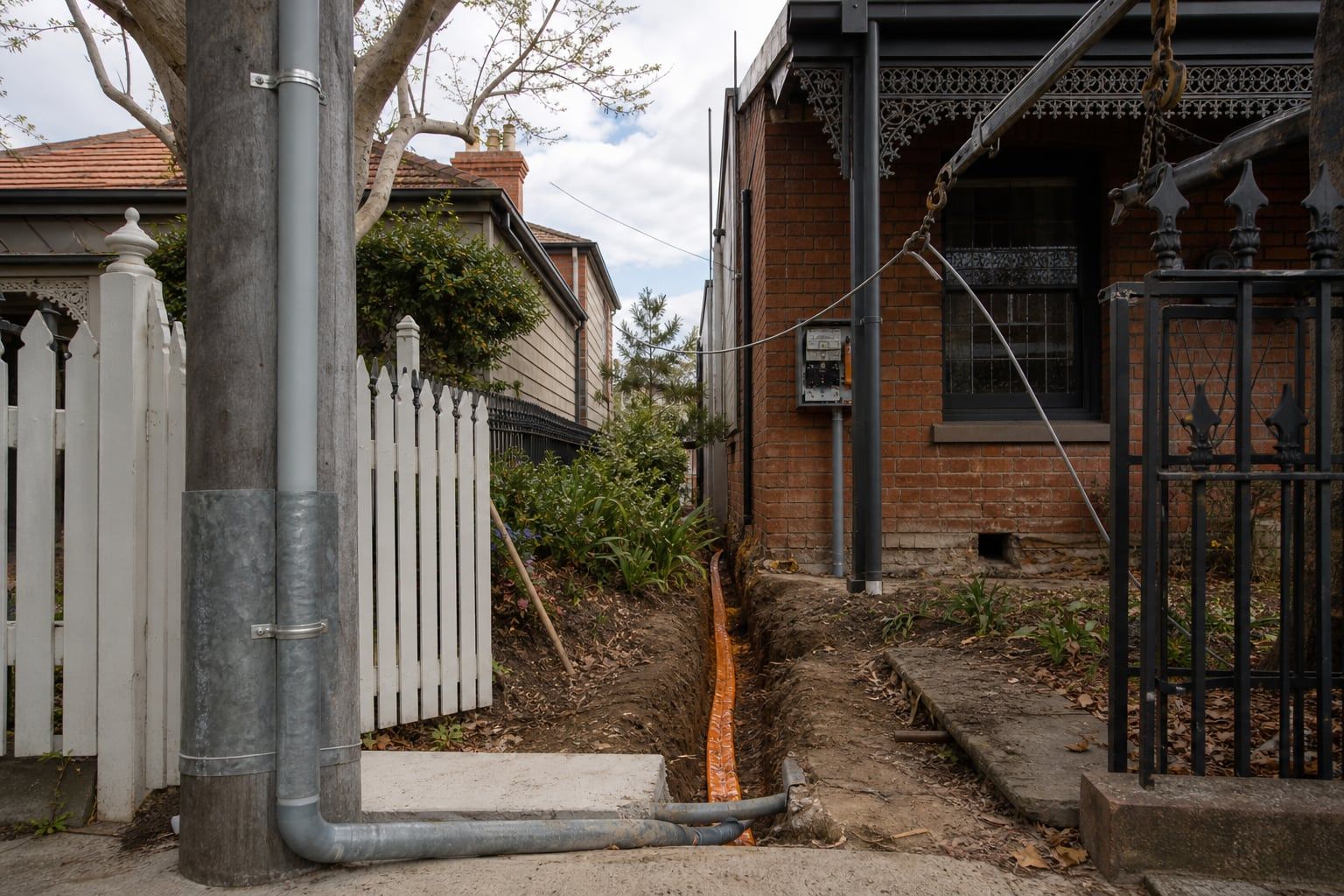
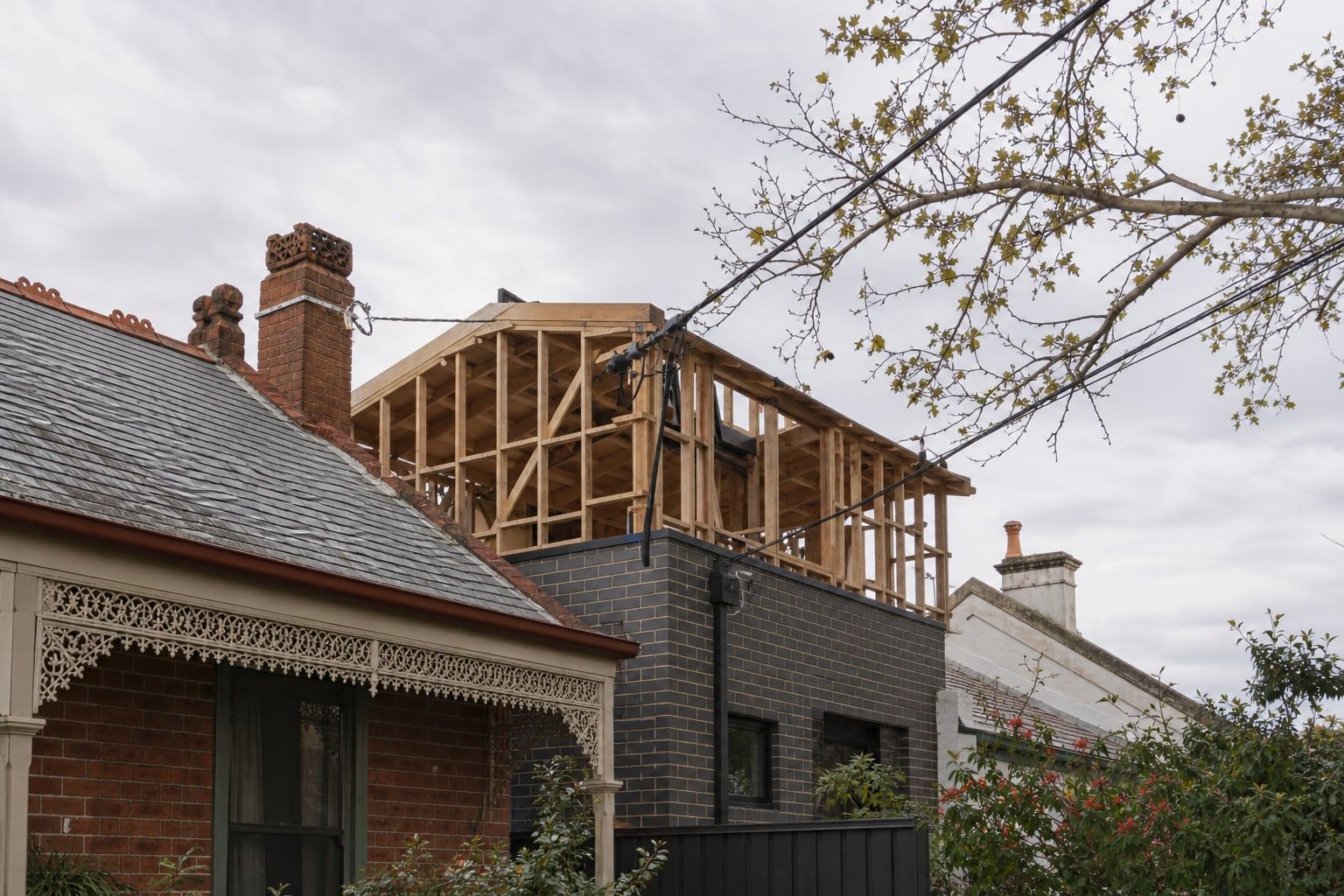
Overhead to Underground Conversion questions in the Inner West
Something else on your mind? Call 0473 522 769 and ask.
Why would I go underground?
An overhead line can be hit by trees, trucks or scaffolding, gets in the way of second-storey extensions and pools, and sometimes sags over neighbours' land. Going underground removes all of that and tidies up the front or back of the house.
Can every Inner West house go underground?
Most can. Where the street is fed by overhead mains, the new cable usually runs up the nearest Ausgrid pole in a protective conduit. Where there are underground mains, we connect at the pit. We confirm the method before quoting.
Who digs the trench?
We do, as part of the job, or we can work with your landscaper or builder if the trench is going in during a wider renovation.
Overhead to Underground Conversion in the Inner West: step by step
- Site visit and routeWe look at where the street supply is, where your meter board is and the easiest route between them.
- Ausgrid requirementsWe confirm the connection method with Ausgrid, whether that's a pit at the boundary or a cable up the street pole.
- Trench and conduitWe dig the trench, lay heavy-duty conduit at the required depth with marker tape, and backfill.
- Connect and remove the old lineWe pull in the new cable, connect both ends, test and reconnect, then take the old overhead line down.
Overhead to Underground Conversion guides for Inner West homeowners
- VIR consumer mains in Inner West terraces: how to spot them and when to replace themWhat VIR cable is, why it is still common in Inner West homes, the signs it is failing and how it is replaced.
- Do I need a level 2 electrician? What Level 2 work covers in the Inner WestThe difference between a Level 2 electrician and a regular electrician, the jobs only a Level 2 can do, and how to tell which one you need.