VIR consumer mains in Inner West terraces: how to spot them and when to replace them
What VIR cable is, why it is still common in Inner West homes, the signs it is failing and how it is replaced.
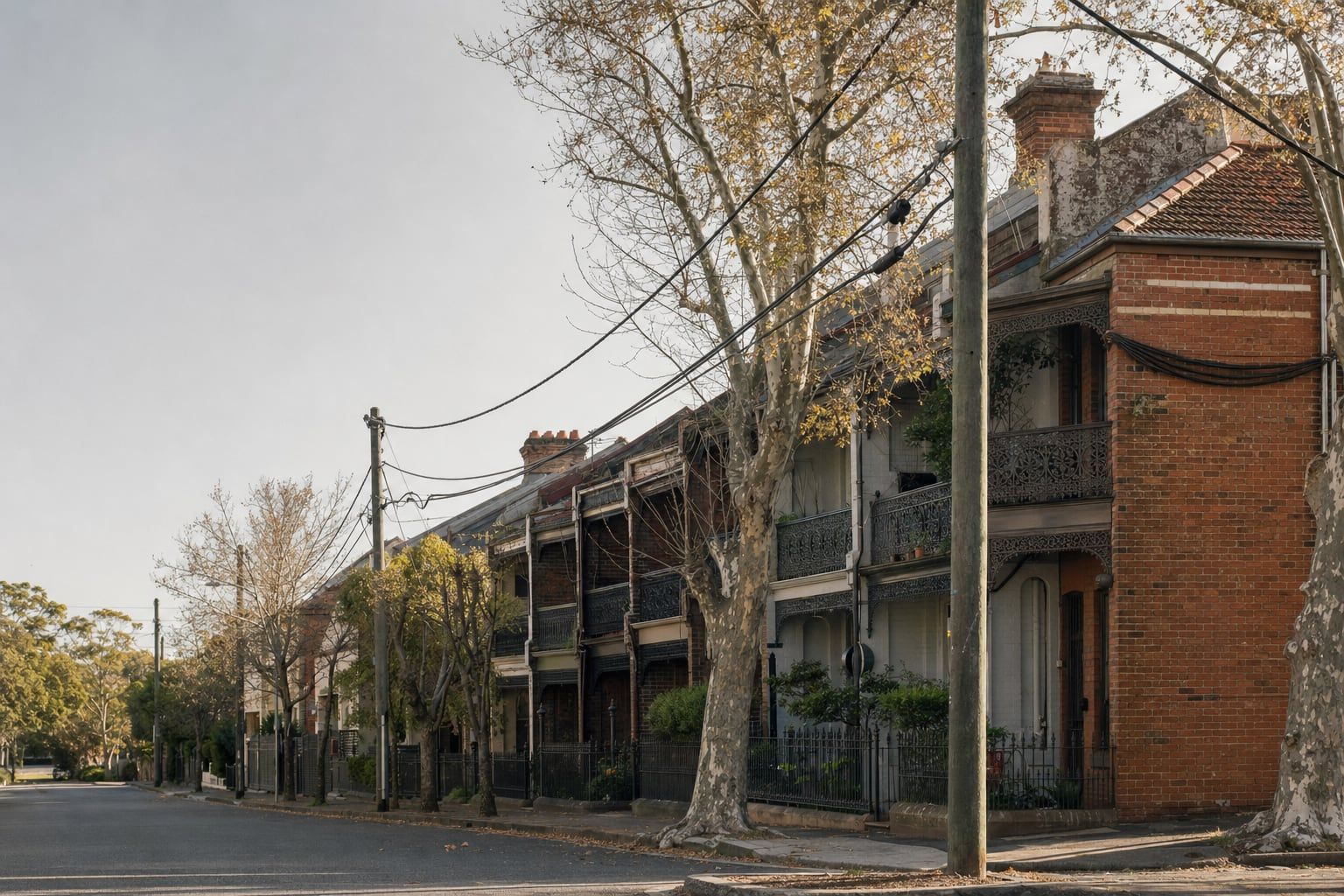
Walk down almost any street in Leichhardt, Marrickville or Dulwich Hill and you’ll pass houses still running on cable that was installed before colour television. Some of the oldest cable still in service in Inner West homes is VIR, and in a lot of houses it’s the cable that brings power from the street to the meter board. This guide explains what VIR consumer mains are, how to tell if you have them, and what to do about it.
What VIR cable is
VIR stands for vulcanised Indian rubber. From the early 1900s through to the 1960s it was a standard way of insulating electrical cable in Australia. Each copper conductor was wrapped in rubber, then often in a cotton or cloth braid, and sometimes coated in a tarry compound. When it was new it was a perfectly good cable.
The trouble is what happens to rubber over 60 to 100 years. It dries out, hardens, shrinks and cracks. Heat speeds this up, and so does sunlight. Once the insulation cracks, small movements are enough to make pieces break off, leaving bare copper conductors. On internal circuits that’s a fire and shock risk. On consumer mains, which carry the full supply to the house and can’t be switched off at your main switch, it’s more serious again.
PVC-insulated cable started replacing VIR from the 1950s and had largely taken over by the 1970s, but houses that weren’t rewired kept the old cable.
Why VIR mains are still so common in the Inner West
The Inner West has one of the oldest housing stocks in Sydney. Victorian terraces, Federation cottages and inter-war bungalows make up a large share of the houses, and many were connected to electricity, or rewired, during the decades when VIR was standard. Plenty have been renovated since, but renovations often leave the consumer mains alone because they sit outside the kitchen and bathroom work most people budget for.
The way Inner West homes are built also makes the mains hard to see. In a terrace, the service line usually attaches to the front facade or a rear wall, and the mains run up into the roof space or along the verandah ceiling before coming down to a meter box on the front verandah or in the hallway. In a laneway cottage they might run down an outside wall next to the rear lane. Either way, they’re rarely somewhere you’d look.
How to tell if your mains are VIR
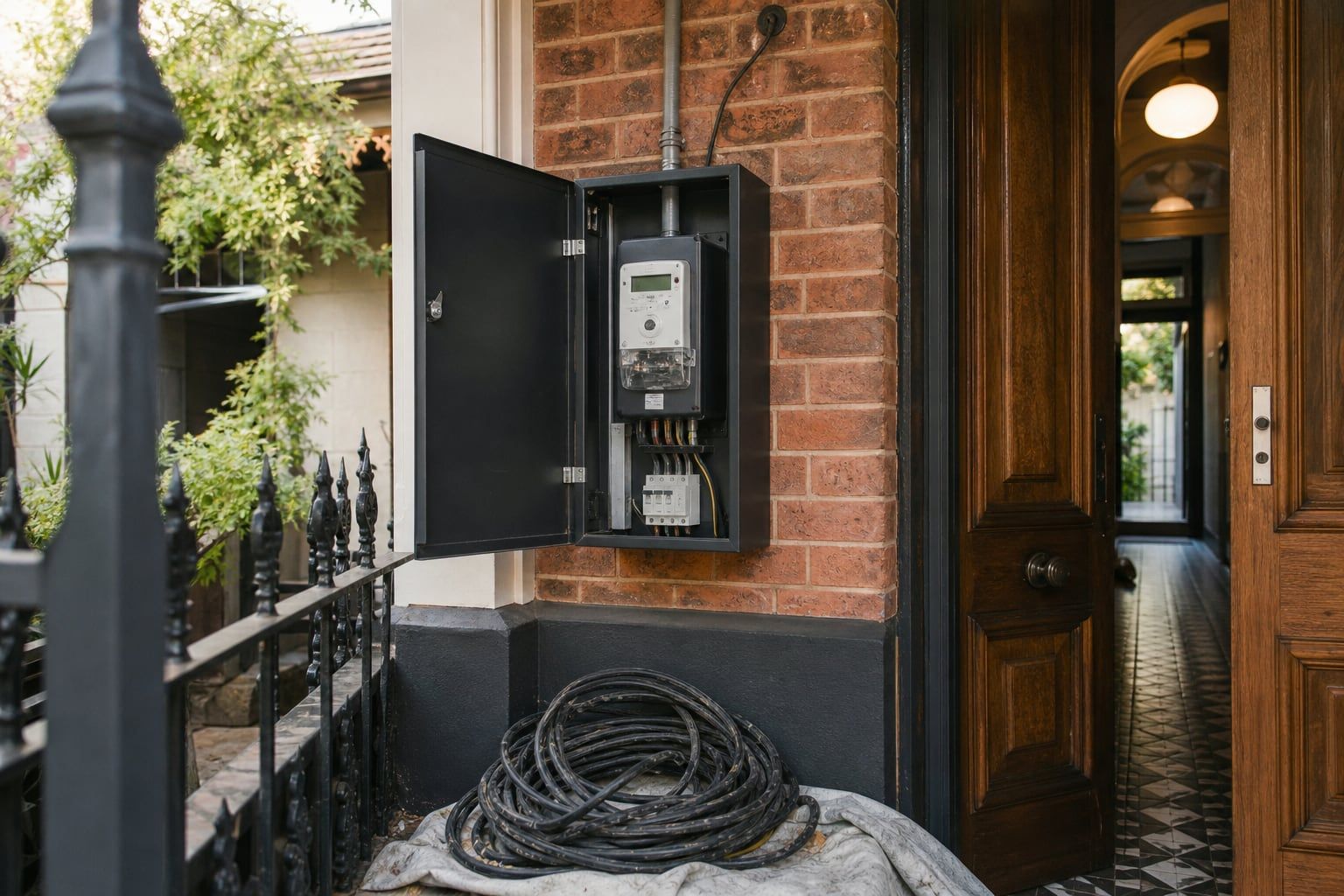
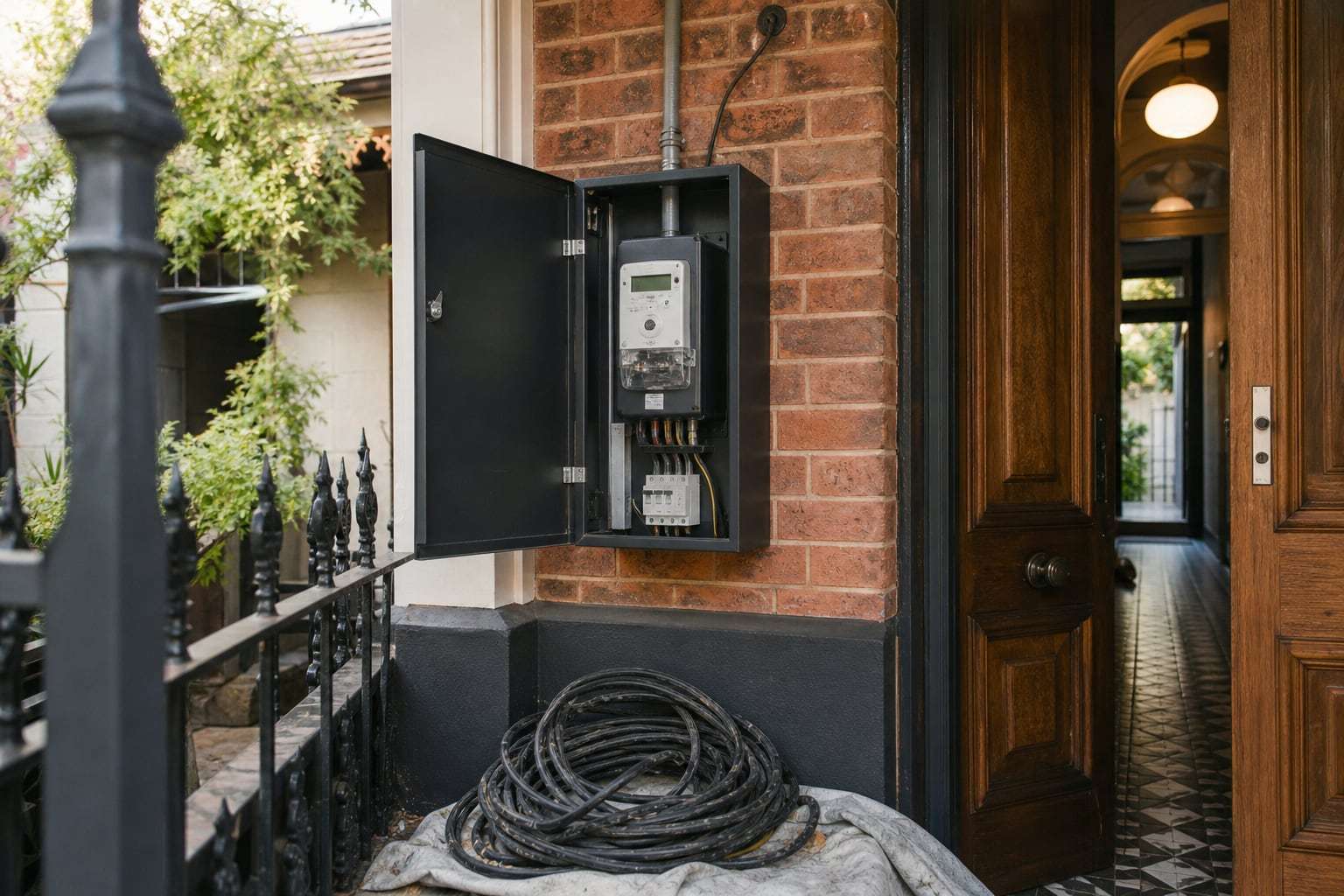
You don’t need to touch anything to get a good idea. With the meter box door open, and without touching any cables, look at where the thick cables enter the board from above or below.
- VIR usually has a black, dull, sometimes cloth-textured outer. It may look cracked, crumbly or flaking. You might see fragments of black insulation in the bottom of the meter box.
- Old PVC is smooth and usually grey, black or red, but can look stiff and faded.
- Modern mains are smooth, flexible-looking PVC or XLPE, often in conduit, with clean terminations.
Other clues:
- The house hasn’t had a mains upgrade in living memory
- The meter board has ceramic fuses or an old black panel
- There are no safety switches, or they’ve been added on separately
- The house is pre-1960s and the meter box is in its original position
If you’re unsure, we can check on a free visit. We look without disturbing anything live.
Warning signs that VIR mains are failing
These signs mean the mains should be looked at soon rather than later:
- Heat. A meter box that feels warm, or a smell of hot rubber or burning near it.
- Scorch marks. Brown or black marks around terminals or on the board itself.
- Flickering or dimming. Lights dim when big appliances start, which can mean poor connections or undersized cable.
- Crumbled insulation. Black fragments under the cable entry, or visible copper.
- Water damage. Stains or corrosion in the meter box after storms. Wet VIR is especially risky.
- Loss of power to the whole house while the neighbours have power.
If you see sparks, smoke or a burning smell, keep clear and call our emergency level 2 electrician line straight away.
VIR mains and modern loads
Even VIR mains in reasonable condition are usually undersized for how Inner West families live now. Ducted air conditioning, induction cooking, electric hot water heat pumps and EV chargers all draw far more than a 1950s household. Old mains that are pushed hard run hot, and heat is exactly what ages VIR insulation fastest. It’s a cycle that ends with failure.
That’s why air conditioning installers and solar companies often won’t connect new equipment until the mains are upgraded. If you’re planning one of those, it’s best to sort the mains out first.
What replacing VIR consumer mains involves
Replacing the mains is a consumer mains upgrade, and it’s Level 2 work because the supply has to be isolated on the network side. The usual steps are:
- Inspection. We trace the old cable from the point of attachment or boundary pit to the meter board and plan the new route.
- Sizing. We size the new mains for your current and planned load.
- Notification. We lodge the required notification with Ausgrid.
- Replacement. On the day, we isolate the supply, remove the old cable and install the new mains, often in conduit.
- Reconnection and certification. We reconnect, test and give you a certificate of compliance.
Most terrace and cottage jobs are finished in a day, with the power back on before we leave.
Replace, relocate or go underground?
A mains upgrade is a good moment to fix other problems with the supply. If the point of attachment is low or in a bad spot, it can be moved. If the meter box is awkward, it can sometimes be relocated, keeping in mind heritage rules on front facades. If the overhead line itself is a problem, an overhead to underground conversion replaces both the service line and the mains with a new underground supply.
What about the rest of the wiring?
VIR consumer mains often mean there’s VIR somewhere in the house too, especially in ceiling spaces and on original lighting circuits. We handle everything from the network to the meter board; a licensed electrician should check the internal circuits. If you need a recommendation, ask us.
Getting it checked
If your Inner West home is old enough to have VIR mains, it’s worth knowing for sure. Call the Inner West level 2 electrician team for a free check and a fixed price. We regularly replace old mains in terraces in Leichhardt, Annandale, Newtown and level 2 electrician Dulwich Hill.
Updated
VIR consumer mains in Inner West terraces: common questions
Something else on your mind? Call 0473 522 769 and ask.
Is VIR cable dangerous?
VIR cable in good condition and left undisturbed can keep working, but once the rubber insulation has hardened and cracked, the bare conductors can be exposed. That's a fire and shock risk, particularly where the cable is moved, overheated or gets wet.
Can I replace VIR mains myself or with any electrician?
No. Consumer mains connect directly to the network supply, which can't be switched off at your main switch. Replacing them needs the supply isolated at the network side, which is Level 2 work.
Should I replace VIR wiring inside the house too?
If the consumer mains are VIR, there's a good chance some internal circuits are too. A licensed electrician can check the internal wiring; we handle the mains from the network to the meter board.